
Introduction
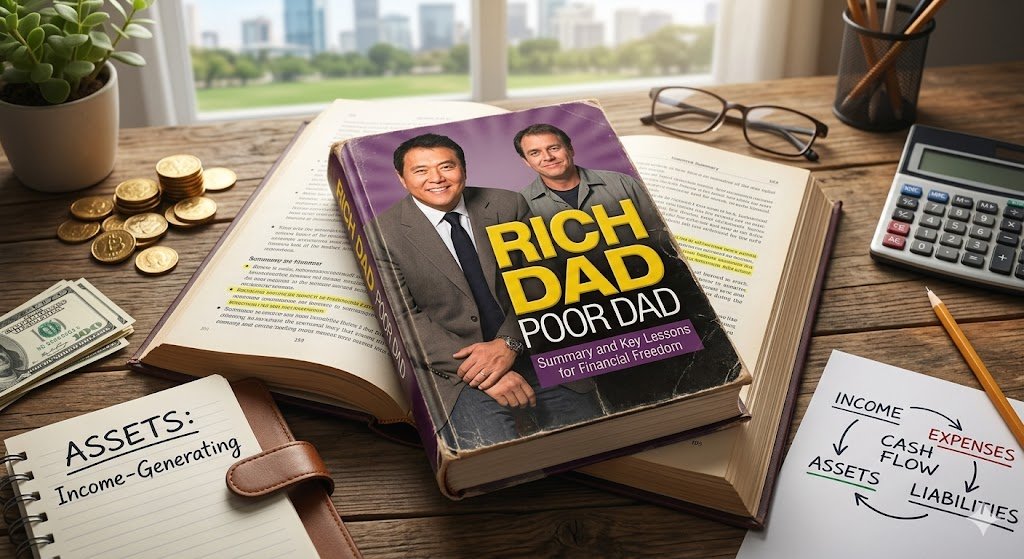
Rich Dad Poor Dad is one of the most popular personal finance books in the world. It was written by Robert T. Kiyosaki and first published in 1997. The book explains the difference between how rich people think about money and how poor or middle-class people think about money. Instead of focusing only on earning a salary, the book teaches readers how to build wealth through financial education, investments, and smart money management.
The story is based on the experiences of the author growing up with two father figures. One was his real father, who was highly educated but struggled financially. The other was his best friend’s father, who had little formal education but became very wealthy. These two different perspectives on money helped the author understand how financial thinking can shape a person’s life.
The Idea of Rich Dad and Poor Dad
The book revolves around two different mindsets:
Poor Dad:
This represents the traditional thinking about money. Poor Dad believes in studying hard, getting good grades, and finding a stable job with a steady paycheck. While this advice seems practical, it often leads people to rely only on their salary and remain financially dependent on their jobs.
Rich Dad:
Rich Dad represents a completely different mindset. Instead of working only for money, he teaches that money should work for you. Rich Dad encourages learning about investments, businesses, and assets that can generate income over time.
The main lesson here is that financial education is more important than simply earning a high salary.
The Importance of Financial Education
One of the biggest messages in the book is that schools do not teach financial education. Most people learn subjects like mathematics, science, and history, but they rarely learn how money works.
According to the author, understanding topics such as assets, liabilities, investments, and cash flow is essential for building wealth. Without this knowledge, people often make poor financial decisions, even if they earn a good income.
Financial education helps people understand how to manage money wisely and create long-term financial stability.
Assets vs. Liabilities
One of the most famous lessons from the book is the difference between assets and liabilities.
Assets are things that put money into your pocket. Examples include:
- Rental properties
- Businesses
- Stocks and investments
- Royalties or intellectual property
Liabilities are things that take money out of your pocket. Examples include:
- Expensive cars
- Large houses with high mortgages
- Credit card debt
Many people believe their home is an asset, but the book explains that if it costs money instead of generating income, it can actually be a liability.
Rich people focus on buying assets that generate income, while poor and middle-class people often spend money on liabilities.
Working for Money vs. Making Money Work for You
Most people spend their entire lives working for money. They wake up every day, go to work, earn a salary, pay bills, and repeat the same cycle.
The book explains that wealthy people think differently. Instead of working harder for money, they look for ways to make money work for them. This can include investments, businesses, or passive income sources.
The goal is to build income streams that continue to generate money even when you are not actively working.
The Power of Entrepreneurship
Another important lesson in the book is the value of entrepreneurship. Rich Dad encourages learning how businesses operate and understanding how to create systems that generate income.
Entrepreneurship allows people to control their financial future rather than depending entirely on a job. While jobs provide security, businesses and investments create opportunities for financial growth.
This does not mean everyone must start a large company, but understanding business principles can help anyone make smarter financial decisions.
Overcoming Fear and Risk
Many people avoid investing because they are afraid of losing money. The book explains that fear is one of the biggest reasons people remain financially stuck.
Successful investors understand that risk is part of the process. Instead of avoiding risk completely, they focus on learning how to manage it. Financial knowledge reduces risk and increases the chances of making profitable decisions.
The author emphasizes that mistakes are part of learning. Every financial setback can become a lesson that leads to future success.
The Importance of Financial Independence
Financial independence means having enough income from assets to cover your living expenses. When this happens, a person no longer depends on a job to survive.
The book encourages readers to gradually build assets until their passive income becomes greater than their monthly expenses. This creates freedom and allows people to make life decisions without financial pressure.
Achieving financial independence requires patience, discipline, and consistent financial education.
Key Lessons from the Book
Several powerful lessons can be learned from this book:
- Financial education is essential for long-term success.
- Focus on buying assets instead of liabilities.
- Learn how to make money work for you.
- Develop an entrepreneurial mindset.
- Do not let fear stop you from learning about investments.
- Build passive income sources for financial independence.
These lessons can completely change how people think about money and wealth.
Conclusion
Rich Dad Poor Dad is more than just a book about money. It is a guide to changing your financial mindset. By understanding the difference between assets and liabilities, learning about investments, and focusing on financial education, anyone can begin the journey toward financial freedom.
The book encourages readers to think differently about money and take control of their financial future. Instead of simply working for a paycheck, the goal should be to build systems and investments that create long-term wealth.
For anyone interested in improving their financial knowledge and creating a better future, Rich Dad Poor Dad offers valuable insights that can transform the way people manage money and pursue success.