
Introduction
Atomic Habits is a popular self-improvement book written by James Clear. The book explains how small daily habits can create huge changes in life over time. Instead of focusing only on big goals, the author teaches that tiny improvements repeated every day can lead to massive success.
The main idea of the book is simple: small habits, when repeated consistently, can transform your life. Many people try to change their lives with big decisions, but they fail because they ignore the power of small daily actions.
The Meaning of Atomic Habits
The word “atomic” in the book means very small but extremely powerful. Just like atoms are tiny but form everything around us, small habits can build big results in life.
According to the author, improving just 1% every day can lead to major long-term success. Small changes may seem unimportant at first, but when repeated over months and years, they produce powerful results.
Habits Shape Your Identity
One of the most important lessons in the book is that habits shape your identity. Many people focus only on goals, such as losing weight or becoming successful. However, the book explains that true change happens when you change your identity.
For example:
- Instead of saying “I want to read more,” think “I am a reader.”
- Instead of saying “I want to exercise,” think “I am a healthy person.”
When habits become part of your identity, they become easier to maintain.
The Four Laws of Behavior Change
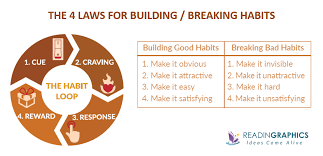
The book introduces a simple system for building good habits and breaking bad ones. These are called the Four Laws of Behavior Change.
1. Make It Obvious
Good habits should be easy to see and remember. If you want to build a reading habit, place a book somewhere visible. Visual reminders help the brain remember what it needs to do.
2. Make It Attractive
Habits become easier when they are enjoyable. Pair a habit with something you like. For example, listen to your favorite music while exercising.
3. Make It Easy
The easier a habit is, the more likely you will do it. Start with small actions like reading just two pages or exercising for five minutes.
4. Make It Satisfying
Immediate rewards help habits stick. When you feel good after completing a habit, your brain wants to repeat it again.
The Power of Small Improvements
One of the key ideas in the book is the concept of continuous improvement. Even a tiny improvement every day can lead to extraordinary success over time.
For example, if someone improves by 1% every day for a year, the results become dramatically better compared to someone who does nothing. This shows that consistent effort is more powerful than occasional big actions.
Breaking Bad Habits
The book also explains how to eliminate bad habits using the opposite of the four laws.
- Make it invisible
- Make it unattractive
- Make it difficult
- Make it unsatisfying
For example, if someone wants to reduce phone usage, they can keep the phone away from their workspace or turn off notifications.
Environment Is More Powerful Than Motivation
Another important lesson in the book is that environment plays a huge role in shaping habits. People often believe they fail because they lack motivation, but the real problem is usually their environment.
For example, if junk food is always visible at home, it becomes harder to maintain a healthy diet. Changing the environment makes good habits easier and bad habits harder.
Focus on Systems, Not Just Goals
The book explains that goals are important, but systems are more powerful. Goals define what you want to achieve, but systems define the daily actions that help you achieve those goals.
For example:
- The goal is to write a book.
- The system is writing 500 words every day.
Successful people focus on building strong systems instead of only thinking about goals.
Key Lessons from the Book
The book offers several important lessons:
- Small habits can lead to big results over time.
- Changing identity helps habits become permanent.
- Good habits should be obvious, attractive, easy, and satisfying.
- Bad habits can be removed by reversing the four laws.
- Environment influences behavior more than motivation.
- Systems are more important than goals.
These lessons help people understand how to create lasting positive change.
Conclusion
Atomic Habits is a powerful guide for anyone who wants to improve their life step by step. The book shows that success does not come from huge changes but from small daily improvements that accumulate over time.
By focusing on identity, building effective systems, and applying the four laws of behavior change, anyone can develop better habits and remove harmful ones.
The message of the book is clear: tiny habits repeated every day can lead to extraordinary results.